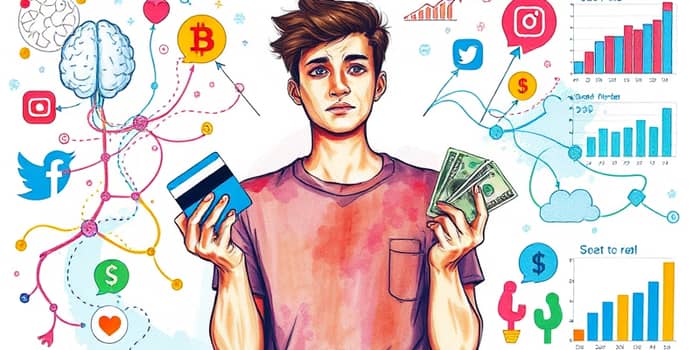
Every time we swipe a card or count out cash, unseen forces in our brain and emotions are at work. From the thrill of anticipation to the subtle pull of digital transactions, understanding these hidden drivers can transform our relationship with money. In this article, we explore the science and strategies that can help you spend mindfully and confidently.
When you consider a purchase, your brain’s reward circuitry lights up, releasing dopamine that makes buying feel exhilarating. Researchers using MRI scanners have observed that simply anticipating a new acquisition activates the nucleus accumbens, a key region for motivation and pleasure.
These findings show that anticipation alone triggers joy even before the purchase. It’s why window shopping or browsing online can be as satisfying as the act of spending itself. Recognizing this can help you differentiate between genuine need and fleeting desire.
Mood plays a pivotal role in spending decisions. Known as “retail therapy,” sad or stressed individuals often seek shopping as a form of emotional relief. Unfortunately, this can lead to impulsive purchases and lingering regret.
Peer influence intensifies the effect. A recent survey found that over one-third of adults admit to overspending to impress friends or match lifestyles seen on social media. Identifying these pressures is the first step toward self-regulation.
How we pay directly affects how much we spend. Digital transactions often mask the “pain of paying,” making purchases feel less real. This phenomenon, called Spendception, correlates strongly with impulse buying. Studies report a correlation coefficient of 0.626 between digital payment detachment and impulsive purchases.
Credit cards further reduce psychological cost. In experimental settings, card users bid more than twice the amount of cash users, perceiving each dollar as only fifty cents of value. Below is a comparison of payment methods and their effects.
Setting budgets is more than a spreadsheet exercise. Mental accounting provides spending boundaries that help curb excess. Even if you don’t follow the budget perfectly, the mere act of defining limits raises awareness and intention.
Financial apps show that users who allocate specific amounts to categories—groceries, entertainment, savings—exhibit greater discipline. Over time, these routines strengthen willpower and reduce reliance on emotional spending.
Beyond basic triggers, people develop personal spending rules—like only buying high-priced items on sale. These heuristics function as guardrails, simplifying complex decisions and reducing regret.
Demographics matter. Younger generations, native to digital payments and social platforms, experience stronger Spendception effects. Women, in particular, may detach more easily when using cards, increasing susceptibility to impulse purchases. Recognizing your unique vulnerabilities empowers targeted strategies.
To transform insights into action, adopt these proven techniques:
Regularly reviewing progress fosters accountability. Engage friends or family in budget check-ins, or use apps that visualize spending trends to keep motivation high.
Understanding the psychological forces behind our spending illuminates a path to financial freedom. By recognizing dopamine-driven anticipation, emotional cues, and the effects of payment methods, we gain the power to choose wisely. Implementing budgeting techniques, personal spending rules, and mindful pauses can transform fleeting urges into intentional actions. Start today by observing your triggers, setting clear boundaries, and harnessing the science of spending to build a healthier financial future.
References