In a world where every second counts, the friction of traditional payment methods stands in stark contrast to our fast-paced lifestyles. Invisible payments remove that friction, allowing consumers to complete transactions without the familiar tap, swipe, or PIN entry.
This article delves into the evolution of this technology, its real-world applications, enabling architectures, adoption trends, security frameworks, and the path forward toward a truly frictionless commerce ecosystem.
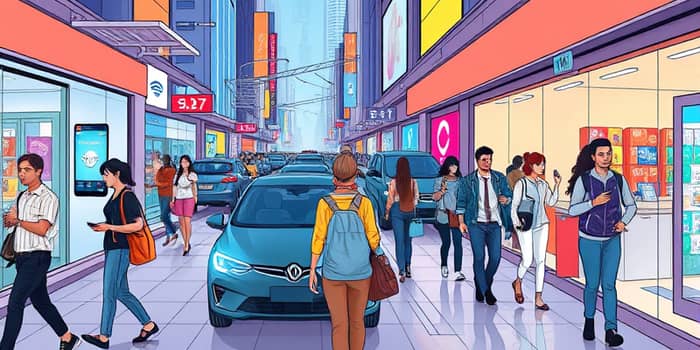
Invisible payments are characterized by transactions that occur entirely behind the scenes, without any active input from the consumer at the checkout moment. The payment step becomes imperceptible and woven seamlessly into the environment.
To enable this, systems rely on pre-authenticated credentials enable backend systems, which store and verify user payment details securely during initial setup. Purchase events are captured via sensors, cameras, or device triggers and billed automatically, with confirmations delivered through real-time notifications.
The ultimate goal is a consumer experience so smooth that users focus solely on their activity—shopping, dining, or commuting—rather than on how they will pay for it.
Several pioneering implementations illustrate the transformative power of invisible payments across industries and geographies.
Together, these examples highlight how invisible payments enhance speed, safety, and personalization at scale.
Invisible transactions depend on a sophisticated interplay of hardware, software, and data security protocols to deliver seamless experiences while safeguarding consumer data.
Core technologies include:
This layered architecture underpins an effortless, frictionless payment experience that consumers can trust and rely upon.
Invisible and contactless payment solutions have seen explosive growth over the past half-decade, driven by consumer demand for convenience, hygiene, and speed.
Recent market data reveals:
Between 2020 and 2025, the volume of contactless and invisible transactions surged by 410%, signaling a seismic shift in payment preferences. The Asia-Pacific region leads with 56% of all transactions touching invisible or contactless rails, while North America follows closely at 68% contactless card usage.
Small and medium businesses adopting these technologies report a 15% lift in transaction speed and a 22% increase in customer satisfaction scores, underscoring clear business value.
The rise of invisible payments is charting new behavioral patterns among shoppers and service users.
Voice-activated assistants and wearable payment devices are also carving out new niches in everyday spending, from morning coffee to grocery restocking.
Behind every invisible transaction lies a robust security framework designed to protect consumer identities and financial data.
Enhanced measures include multi-factor authentication, real-time risk scoring, and adaptive biometric challenges when anomalies are detected. Tokenization has driven a 34% reduction in fraud across invisible payment channels in 2025.
Privacy-first consent frameworks ensure that biometric and behavioral data are used ethically, transparently, and in compliance with global regulations like GDPR and CCPA. These protections bolster consumer trust and accelerate adoption.
Despite rapid progress, several factors will shape the trajectory of invisible payments in the coming years.
Key challenges include:
Looking ahead, forecasts predict the market will more than double by 2029, solidifying invisible payments as one of the fastest-growing segments in financial technology. As AI and blockchain mature, we can expect even deeper personalization, predictive billing, and near-instant settlement networks.
Invisible payments herald a new era where commerce fades into the background of our daily lives, empowering us to engage with products and services effortlessly. The future of seamless transactions is not a distant vision—it is unfolding now.
Businesses, policymakers, and technologists must collaborate to refine standards, invest in infrastructure, and educate consumers, ensuring that this revolutionary payment paradigm benefits everyone, everywhere.
References